
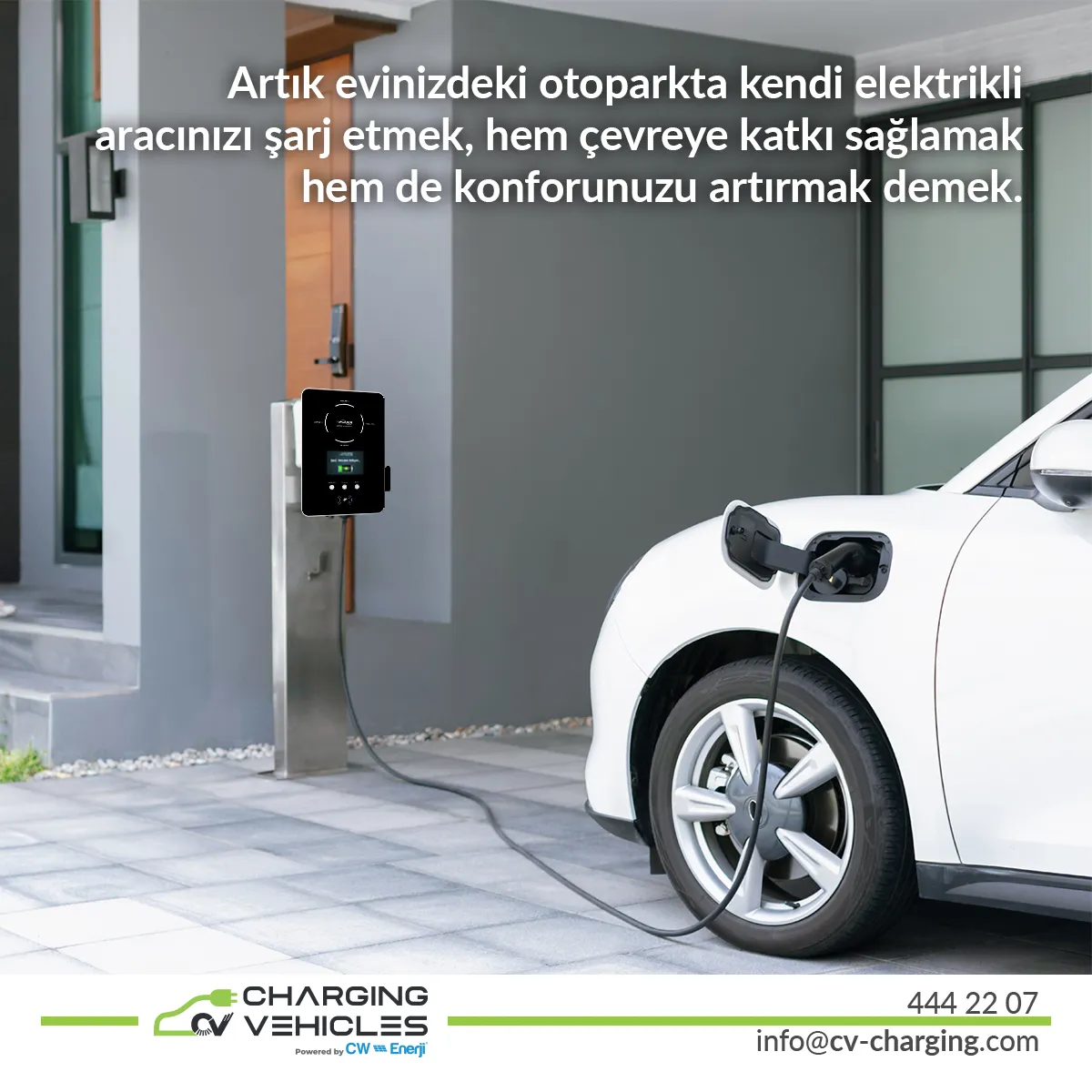
Home Electric Vehicle Charging Station Installation and Cost
Can an Electric Vehicle Charging Station Be Installed at Home?
One of the most frequently asked questions by home users is can a charging station be installed at home. Yes, you can install an EV charging station in your home. With AC EV charging stations, you can charge your vehicle at home. Installing a home EV charging station is legal in Turkey, and there is no requirement to obtain a license for home use. However, if the installation will take place in shared residential areas such as apartment buildings or residential complexes, permissions and approvals may be required.
Home EV charging station installation process
Electrical Infrastructure: The existing electrical infrastructure of the home is examined and the system’s suitability is checked. If the infrastructure is insufficient, procedures such as capacity upgrades and installing a new line may be required.
Charger Selection: A suitable home EV charger is selected. In this regard, the TommaTech EV charger (Likya series 22kW) stands out thanks to its certified structure and fast charging support.
Inspection and Installation: A site survey is conducted before installation. At this stage, factors such as infrastructure inadequacy and location suitability are evaluated.
After the process is completed, the product is mounted in the pre-determined area. Then, the electrical connection is made and the system is commissioned by integrating it into the home’s electrical infrastructure.
Once these steps are completed, the product is installed in the designated area. Then, the device is connected to the power source and integrated into the home’s electrical infrastructure in order to bring it into operation.
In the final stage, the necessary tests are carried out on the device. If no issues are detected, the EV charger installation process is completed.
Average Installation Cost of a Home EV Charging Station
The cost of installing an EV charging station varies depending on several factors.
This cost is related to the 2025 electric vehicle charging cost and also depends on the type of charging station used.
In addition, the electrical grid infrastructure and additional expenses during installation also affect the total cost.
Below are the estimated costs for installing a home EV charging station in Turkey in 2025.
| Component | Average Cost Range |
| Charging Unit | 15,000 TL – 45,000 TL |
| Electrical Infrastructure Upgrade | 5,000 TL – 20,000 TL |
| Installation / Mounting | 2,000 TL – 8,000 TL |
| Total | 22,000 TL – 73,000 TL |
These prices may vary depending on the brand of the charging station, installation details, and additional services.
Required Documents to Install a Home EV Charging Station
This process may vary depending on your location and is generally examined under two categories: apartment buildings and detached houses. Below is information regarding the required EV charging station documents.
Charging station documents for detached houses
For detached home charger installation, no specific permission is required. However, there are technical and legal requirements that should be considered.
The installation must be carried out by an authorized technical service or by individuals who have the required certification. This is important to ensure that the device (AC charger installation) is mounted properly.
Before installation, the electric vehicle home charging infrastructure is examined in detail and the suitability of the existing electrical system is checked. This inspection is necessary for safe use.
The charger must have necessary certificates and technical documentation such as CE certification. These documents indicate that the charger is suitable for outdoor use.
After installation is completed, the installation report, warranty document, and user manual are delivered by the authorized team.
Charging station documents for apartment buildings and residential complexes
In apartment buildings and residential complexes, the process starts by obtaining management approval and certain written permissions. In this context, a written apartment charging station permission is generally sufficient for the installation process. If the system will be connected to the apartment’s main electrical panel, approval from the apartment owners may be required. The recommended method is to use a meter registered under your own name, which helps prevent billing issues.
First, the EV home charging infrastructure is checked. Then, mounting is performed either as wall-mounted or floor-mounted (stand type).
After mounting, the electrical connection is completed and necessary safety measures are taken.
After installation, required testing procedures are carried out and the charging station installation is completed and commissioned.
How Can You Save Money While Charging Your EV at Home?
Electric vehicles can be charged at public charging stations. However, these stations may not always be available.
Home chargers provide fast and direct access to your vehicle. This makes the charging process more practical.
In addition, the unit energy cost at public charging stations is generally higher compared to home charging solutions.
Installing a home EV charging station helps you control costs and improves the overall user experience.
How to Calculate Home EV Charging Time?
Charging time depends on your vehicle’s battery capacity, the power output of the charger used, and the current charge level.
A simple formula can be used for an approximate calculation.
Charging time is calculated by dividing the battery capacity by the charger power.
For example, consider a vehicle with a 60 kWh battery capacity.
This vehicle can be charged in approximately 8.5 hours using a 7 kW home charger.
In this calculation, 8.5 hours applies when the battery is completely empty. In other cases, charging time may vary depending on charging acceptance capacity and the cable used. For example, some vehicles may draw only 11 kW even when connected to a 22 kW charger. Therefore, it is important to choose a charger compatible with your vehicle’s technical specifications.
What Are the Types of EV Charging Stations?
AC (Alternating Current) charging stations are commonly used in homes and low-power charging needs. Electricity comes to your home as AC (alternating current). After entering the vehicle, it is converted into DC current suitable for the battery by the onboard charger.
DC (Direct Current) charging stations deliver energy directly to the battery. They convert electricity into DC inside the charging station and transfer it to the vehicle at high speed. Because this system offers fast charging, it is preferred on highways and in public areas.
Technical and Usage Differences:
| Feature | AC Charging | DC Charging |
| Charging Speed | Medium – Slow | Fast – Very Fast |
| Power Range | Typically 3.7 kW – 22 kW | 50 kW – 350 kW (and above) |
| Usage Area | Home, parking lots, offices | Highways, public areas, commercial |
| Installation Cost | Low | High |
| Hardware Requirement | Simple | Advanced (cooling, power modules) |
| Effect on Vehicle | Vehicle manages charging | Vehicle only receives power |
| Typical Charging Time (60 kWh) | 5–10 hours | 20–60 minutes |
FREQUENTLY ASKED QUESTIONS
Yes, home EV charging station installation is completely legal in Turkey. No additional permit is required for detached houses. In apartment buildings or residential complexes, written permission from management or homeowners may be required.
Yes, you can. However, since installation will take place in a shared parking area, you need approval from the site management or building manager. In some cases, a decision from the homeowners’ association may also be required. It is also recommended to have your own personal electricity meter for billing purposes.
This depends on how often you charge and your vehicle’s battery capacity. On average, a full charge for an electric vehicle may cost between 50–90 TL. Using an off-peak electricity tariff (lower consumption hours) can make charging more economical.
Installation must be carried out by an authorized technical service or an electrical engineer. This is critical for both safety and warranty validity.
For home use, AC chargers (7 kW, 11 kW, or 22 kW) are generally preferred. These chargers allow you to safely charge your vehicle overnight and are suitable for standard home electrical infrastructure. When choosing, consider your vehicle’s maximum supported charging power.